AACI Board of Directors

Meet the President
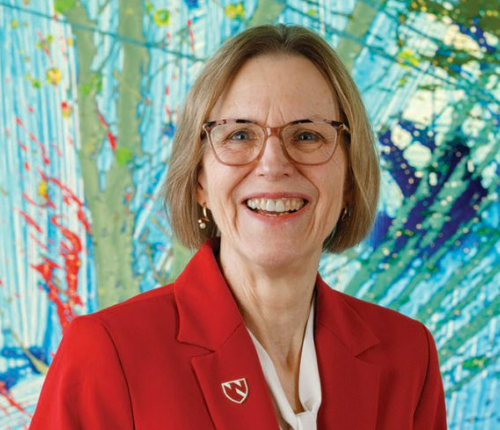
An internationally recognized expert in the genetics, cell biology, and biochemistry of DNA repair, Dr. Joann B. Sweasy is director of the Fred & Pamela Buffett Cancer Center and the Eppley Institute for Research in Cancer and Allied Diseases. Dr. Sweasy is deeply committed to engaging rural and other underserved communities; preparing the next generation of researchers; fostering bidirectional translation; and optimizing the role of the cancer center within the academic and clinical organizational structures.
Meet the Board
Cornelia Ulrich
Cornelia Ulrich
Dr. Cornelia “Neli” Ulrich is the chief scientific officer and executive director of the Comprehensive Cancer Center at Huntsman Cancer Institute and the Jon M. and Karen Huntsman Presidential Professor in Cancer Research at the University of Utah’s Department of Population Health Sciences. In her role as chief scientific officer, she leads over 300 research teams dedicated to advancing cancer science and improving health outcomes. Previously, she directed the National Center for Tumor Diseases in Heidelberg, Germany, bringing international perspectives to cancer leadership.
Dr. Ulrich is a renowned cancer epidemiologist and a leading expert in cancer prevention, molecular epidemiology, and survivorship. Her interdisciplinary research has been pivotal in revealing how health behaviors such as physical activity, obesity, and diet influence cancer risk and outcomes. She has also conducted multiple exercise clinical trials that explore underlying biologic mechanisms and the role of physical activity in adjuvant cancer therapy. Over the course of her career, she has authored more than 500 scientific publications and led more than 26 grants to advance evidence-based strategies that support survivors, clarify biologic pathways, develop biomarkers of treatment response, and promote healthier communities.
Motivated by her wish to improve the health of rural populations and provide access to all, she has broadened Huntsman Cancer Institute’s catchment area to formally encompass five states—Utah, Wyoming, Idaho, and Montana—driving innovations, including through artificial intelligence, to overcome distance from care as a barrier.
Dr. Ulrich’s leadership extends beyond the lab. She is a former Fulbright scholar, served on the Board of Scientific Advisors of the National Cancer Institute (NCI), and chairs a newly formed National Cancer Advisory Board Working Group. She holds or has held influential roles in organizations such as the American Association for Cancer Research, the European Association for Cancer Research, and the International Agency for Research on Cancer. Her service on multiple advisory boards of NCI-Designated Cancer Centers reflects her commitment to the research community and to translating science into public impact.
She has also contributed significantly to the Association of American Cancer Institutes (AACI), where she chaired the 2022 AACI/CCAF Program Committee—leading the first in-person meeting after the COVID-19 pandemic and shaping critical discussions on the future of cancer research, including COVID-19 recovery, the Cancer Moonshot, and precision oncology. She has participated as a panelist in AACI’s new directors’ meetings, the Inclusive Excellence Initiative Steering Committee, and AACI/CCAF leadership forums, sharing insights on effective cancer center leadership and inclusive strategies. In addition, she has been a frequent participant in Capitol Hill advocacy days, collaborating with colleagues from other cancer centers in advancing national support for biomedical research and cancer prevention.
Her many honors—including the Utah Governor’s Medal for Science and Technology, the Simon Shubitz Award from the University of Chicago, Collaborative Science Awards, and recognition as a Best Female Scientist—underscore her impact on science and society. They also mirror her guiding philosophy as a cancer center director: to advance discovery science, cancer prevention, and clinical care through collaborative research, leadership, and policy – transforming knowledge into hope for patients and communities.
Robert Winn
Immediate Past President
As director of VCU Massey Comprehensive Cancer Center, Robert A. Winn, MD, oversees a cancer center designated by the National Cancer Institute (NCI) that provides advanced cancer care, conducts groundbreaking research to discover new therapies for cancer, offers high-quality education and training, and engages with the community to make advancements in cancer treatment and prevention equally available to all. He is leading the nation in establishing a 21st-century model of equity for cancer science and care, in which the community is informing and partnering with Massey on its research to best address the cancer burden and disparities of those the cancer center serves, with a local focus but global impact.
His current basic science research, which has been supported by multiple National Institutes of Health (NIH) and Veterans Affairs Merit awards, focuses on the molecular mechanisms and novel therapeutic approaches for human models of lung cancer. He has authored or co-authored more than 80 published manuscripts in peer-reviewed academic journals.
As a pulmonologist, Dr. Winn is committed to community-engaged research centered on eliminating health disparities. He is a principal investigator on several community-based projects funded by the NIH and NCI, including the All of Us Research Program, an NIH precision medicine initiative. Dr. Winn has nearly 20 years’ commitment to Veterans Affairs health services and held appointments at the Denver VA and Jesse Brown VA in Chicago, where he established the first multidisciplinary pulmonary nodule clinic.
Dr. Winn is the president of the Association of American Cancer Institutes (AACI); the chair of the National Cancer Policy Forum of the National Academies of Sciences, Engineering, and Medicine; a fellow of the American Association for Cancer Research (AACR) Academy; and a member of the Board of Directors for the American Cancer Society and LUNGevity Foundation. The recipient of numerous awards and honors, Dr. Winn has received the National Cancer Institute Center to Reduce Cancer Health Disparities CURE Program Lifetime Achievement Award; the AACR-Minorities in Cancer Research Jane Cooke Wright Lectureship; the AACI Cancer Health Equity Award; and the Prevent Cancer Foundation Cancer Prevention and Early Detection Laurel Award for Increasing Health Equity. In 2022, the Bristol Myers Squibb Foundation Diversity in Clinical Trials Career Development Program was renamed the Robert A. Winn Diversity in Clinical Trials Award Program (Winn Award), which is committed to increasing diversity in clinical trials and training the new generation of community-oriented clinical researchers.
Dr. Winn holds a BA from the University of Notre Dame and an MD from the University of Michigan Medical School in Ann Arbor. He completed an internship and residency in internal medicine at Rush-Presbyterian-St. Luke’s Medical Center in Chicago and a fellowship in pulmonary and critical care medicine at the University of Colorado Health Sciences Center in Denver.
David Gosky
Treasurer
David M. Gosky, MA, MBA is the Executive Director of Administration at The Ohio State University Comprehensive Cancer Center (OSUCCC) where he oversees all administrative, operational and fiscal responsibilities for the research arm of Ohio State’s cancer program. He is integrally involved in efforts that are essential to maintaining and renewing OSUCCC’s status as an exceptionally ranked NCI designated comprehensive cancer center.
Prior to working at Ohio State, he was the Director of Administration and Finance at the University of Kentucky Markey Cancer Center for nearly ten years. At Markey, he played a pivotal role in helping them obtain NCI designation in 2013 and recompete in 2018.
Earlier in his career, he held leadership positions at the University of Texas Medical Branch and Case Western Reserve University.
He currently serves on External Advisory Boards for several other cancer centers, is on the board for the Alliance of Dedicated Cancer Centers and is the Treasurer for the Association of Cancer Executives.


Jennifer Pegher
Executive Director
Jennifer W. Pegher, MA, MBA, was named executive director of the Association of American Cancer Institutes (AACI) in October 2018. She is the second executive director in AACI’s history.
Pegher joined AACI in 2012 as government relations manager. In 2015, she was named director of government relations, and in 2018, deputy director. Before joining AACI, Pegher served as executive director of the Western Pennsylvania Chapter of the National Hemophilia Foundation. Previously, she worked in Washington, DC, for former Congressman Philip S. English of Pennsylvania and the National Association of Federally-Insured Credit Unions (formerly the National Association of Federal Credit Unions).
Under Pegher’s leadership, AACI has increased its cancer center membership, welcomed new corporate and sustaining members, and formed new partnerships with like-minded organizations. Additional accomplishments include establishing task forces to address conflicts of interest, staff retention, and diversity, equity, and inclusion; overseeing presidential initiatives focused on cancer-related public policy, mitigating cancer disparities, and enhancing diversity in the cancer center leadership pipeline; and expanded opportunities for networking, including new listservs dedicated to special roles and topics, and meetings for new cancer center directors.
Pegher earned her master of arts degree in government at the Johns Hopkins University and her bachelor of arts degree in political science at the University of Pittsburgh at Johnstown. In December 2023, she earned her Executive MBA in Healthcare at the University of Pittsburgh.


Raymond DuBois
Term Expires 10/26
Dr. Raymond N. DuBois is a renowned physician-scientist and cancer researcher who has made significant contributions to understanding the role of inflammation and inflammatory mediators in the progression of colon cancer and other gastrointestinal malignancies. His work has led to a better understanding of the molecular basis for anti-inflammatory agents, such as aspirin, in reducing cancer risk. It has also led to clinical trials showing how drugs that inhibit this pathway could prevent or intercept the cancerization process.
Dr. DuBois has published over 160 peer-reviewed research articles out of a total of 274 publications, more than 72 review articles, 25 book chapters, and three books during his career, and his work has been cited over 66,000 times. He is also a co-inventor of a method to identify and target cellular genes needed for viral growth and cellular genes that function as tumor suppressors in mammals, which led to the creation of a biotech company that utilized this technology as a platform to discover new drug targets for the treatment of cancer and viral infections.
He has been recognized with numerous awards for his cancer research, including the Richard and Hinda Rosenthal Research Award, the Dorothy P. Landon-AACR Cancer Prize, the Margaret Foti Award for Leadership and Extraordinary Achievements in Cancer Research, the AACR Distinguished Service Award, and the Anthony Dipple Carcinogenesis Award from Oxford University Press. He was inducted as a member of the National Academy of Medicine in 2019 and is a Fellow of the American Association for the Advancement of Science, the Academy of the American Association for Cancer Research, the American Gastroenterology Association, and the Royal College of Physicians. In addition, he currently holds the positions of executive chair of the Board of Directors of the Mark Foundation for Cancer Research and vice chair of the Stand Up to Cancer Foundation.
Dr. DuBois earned a bachelor’s degree in biochemistry with honors from Texas A&M University, a PhD in biochemistry from The University of Texas Southwestern Medical Center, and a medical degree from The University of Texas School of Medicine in San Antonio. In addition, he completed his internship/residency in medicine and a gastroenterology fellowship at the Johns Hopkins Hospital, where he studied under Nobel Laureate Daniel Nathans as a Howard Hughes Research Associate. He has previously served as director of the Vanderbilt-Ingram Cancer Center, provost and EVP at The University of Texas MD Anderson Cancer Center, executive director of the Arizona Biodesign Institute at Arizona State University, and president of the American Association for Cancer Research.
Bernard Evers
Term Expires 10/27
Dr. B. Mark Evers is an accomplished surgical oncologist, cancer researcher, educator, and administrator. He was recruited to the University of Kentucky (UK) in 2009 as director of the UK Markey Cancer Center (MCC); physician-in-chief of the Oncology Service Line; and associate vice president for oncology research and strategic development. Under his leadership, the MCC achieved National Cancer Institute (NCI) designation in 2013, successfully competed for renewal of its Cancer Center Support Grant (P30) in 2018, and achieved Comprehensive status with its recent renewal in 2023. Prior to his recruitment to UK, Dr. Evers was the Robertson-Poth Distinguished Chair in General Surgery and director of the University of Texas Medical Branch (UTMB) Cancer Center.
The Evers laboratory, which has been continuously funded by the National Institutes of Health (NIH) for the last 32 years, is focused on signaling pathways regulating proliferation of both normal and neoplastic intestine. It has described critical roles for components of the PI3K and mTOR pathways on colorectal cancer growth, progression, and metastasis. Moreover, his laboratory has identified a critical role for neoplastic lipogenesis and expression of fatty acid synthase (FASN) in colorectal cancer progression. Another major focus is the study of GI hormones (e.g., neurotensin) and their effects on normal and neoplastic growth, metabolism, and obesity. In his surgical-based laboratory, Dr. Evers and his colleagues have over 30 years of experience in the development of novel models and techniques that allow them to address translational and clinically-relevant questions in murine models, such as the establishment and utilization of patient-derived xenografts (PDXs), which include one-of-a-kind GI and endocrine tumor models.
Dr. Evers is either principal investigator (PI) or multi-PI of four current R01s and has published more than 450 peer-reviewed publications, book chapters, and reviews. Throughout his career, he has received more than 30 awards, including the Flance-Karl research award from the American Surgical Association (ASA), and held numerous leadership positions in national and international organizations. He is an elected member of the National Academy of Medicine (NAM), the Association of American Physicians (AAP), and the American Society of Clinical Investigation (ASCI). He is the past president of the Society of University Surgeons, past president of the Southern Surgical Association, and past treasurer of the ASA.
Dr. Evers has trained and mentored over 90 junior faculty, fellows, residents, and students in the performance of translational GI cancer studies involving interdisciplinary teams of investigators. He is a multi-PI of a T32 to provide interdisciplinary research training in cancer biology to graduate students and postdoctoral fellows (T32 CA165990) and multi-PI of another T32 designed to provide basic oncology training to surgeon scientists (T32 CA160003). Dr. Evers is a past member of three NIH study sections, a current member of the NCI Cancer Center Subcommittee A, and was the associate editor of the Sabiston Textbook of Surgery for the last six editions. Finally, Dr. Evers is a member of seven cancer center external advisory boards, and serves as chair on four of the seven.
Kelvin Lee
Term Expires 10/27
Dr. Kelvin Lee became the third director of the Indiana University (IU) Melvin and Bren Simon Comprehensive Cancer Center in February 2021, succeeding Dr. Patrick J. Loehrer. Dr. Lee is the HH Gregg Professor of Oncology and associate dean for cancer research in the IU School of Medicine and the system oncology medical director for IU Health. He received his medical degree from the University of Michigan (Go Blue!), completed his internal medicine internship and residency at the University of Colorado (Go Buffs!), trained in medical oncology at the University of Michigan, and was a Howard Hughes Medical Research Institute Fellow in the laboratory of Dr. Craig Thompson.
In 1992, Dr. Lee joined Dr. Carl H. June’s Immune Cell Biology Program at the Naval Medical Research Institute in Bethesda, MD, and was an ICBP branch head (Stem Cell and Vaccine Development) and assistant professor of medicine at the Uniformed Services University of the Health Sciences.
Dr. Lee joined the Department of Microbiology and Immunology and the Department of Medicine at the University of Miami (UM) Medical School in 1999. He was co-leader of the Clinical Oncology Research Program (2002-2005) and the Tumor Immunology Program (2005-2006) in the UM Sylvester Cancer Center.
In 2006, Dr. Lee became the Jacob Family Chair of the Department of Tumor Immunology at Roswell Park Comprehensive Cancer Center. He was also co-leader of the Cancer Center Support Grant Tumor Immunology and Immunotherapy Program from 2006 to 2019 and, in 2019, became the senior vice president for basic sciences. Dr. Lee led multiple institute-wide initiatives, including the establishment of the Roswell Park Center for Immunotherapy and the development of the T32-funded PhD graduate program in tumor immunology. He also spearheaded a first-of-its-kind scientific collaboration and business joint venture (Innovative Immunotherapy Alliance with the Center for Molecular Immunology in Havana, Cuba) and developed formal senior scientific leadership for the institution in establishing the Basic and Population Science Research Council. He was awarded the Thomas B. Tomasi Hope Award for Faculty Achievement in 2018.
Dr. Lee is nationally recognized for his work in immunology and multiple myeloma and has been continually peer-review funded since 1999. Most recently, his research has focused on the biology of normal long-lived plasma cells (e.g., Lightman et al. Immunity 2021) as well as multiple myeloma, the transformed counterparts of these plasma cells (e.g., Nair et al. Leukemia 2017). He has translated, and is continuing to translate, his laboratory research into investigator-initiated clinical trials. In addition to his laboratory research (which includes mentoring summer, graduate, and medical student trainees), Dr. Lee has an active clinical practice where he regularly sees multiple myeloma patients.
In addition to his extensive Institutional service, Dr. Lee served on the AACI Presidential Initiative Steering Committee (2021-2023) and as chair of the 2024 AACI/CCAF Annual Meeting Program Committee.
Suresh Ramalingam
Term Expires 10/27
Dr. Ramalingam’s research is focused on the development of novel treatment approaches for patients with lung cancer. Specifically, his group has developed novel treatment options for lung cancer patients harboring an EGFR mutation, resulting in FDA approval of third generation inhibitors for metastatic and locally-advanced non-small cell lung cancer. He leads clinical and translational investigations of novel immunotherapy approaches for the treatment of lung cancer and serves as the principal investigator for the Emory University Lung Cancer SPORE award from the National Cancer Institute (NCI).
Dr. Ramalingam has published more than 400 peer-reviewed publications, with over 36,000 citations and an H-index of 80. His research has been published in leading journals including the The New England Journal of Medicine, The Lancet, Science, Nature, The Proceedings of the National Academy of Sciences, The Journal of Clinical Investigation, and the Journal of Clinical Oncology. Additionally, Dr. Ramalingam is the editor-in-chief of Cancer, a journal of the American Cancer Society.
The recipient of numerous awards, Dr. Ramalingam has been honored with the James R. Eckman Award for Excellence at Emory University, Paul Bunn Jr Award for Scientific Merit (IASLC), the Georgia Cancer Coalition’s Distinguished Cancer Scholar Award, the ECOG Young Investigator Award (2013), the NCI Clinical Investigators Team Leadership Award (2010-2012), and the ASCO Career Development Award (2006–2009).
Dr. Ramalingam is deputy chair for Therapeutics Programs at ECOG-ACRIN and a former chair of the ECOG-ACRIN Thoracic Malignancies Committee. He served as a member of the boards of directors for the International Association for the Study of Lung Cancer (2017-2021) and Emory Healthcare and as a member of the NCI Thoracic Malignancies Steering Committee (2012-2021). He is a member of the NCI Clinical Trials and Translational Research Advisory Committee. He also serves on the board of the Georgia Center for Oncology Research and Education.
Yolanda Sanchez
Term Expires 10/26
Dr. Yolanda (Yoli) Sanchez is director and CEO of the University of New Mexico (UNM) Comprehensive Cancer Center. She is responsible for all cancer research and cancer clinical programs at UNM, covering all schools, colleges, departments, and facilities. Dr. Sanchez has authority over all basic, translational, clinical, and population-based research; all cancer clinical trials; and all ambulatory and inpatient cancer clinical services, which include the UNM Comprehensive Cancer Center (UMCCC) clinical building and 30 dedicated beds at UNM Hospital.
Dr. Sanchez oversees all UNMCCC funding, including the National Cancer Institute (NCI) Cancer Center Support Grant (CCSG) (P30-CA118100); philanthropic funds directed through the UNM Foundation; and New Mexico state appropriations and revenue directed to the UNMCCC. She holds joint responsibility and authority with deans and department chairs for all UNM Cancer Center faculty recruitments. Dr. Sanchez also collaborates with the UNM Health System EVP/CEO to seek support for cancer programs and to provide input to state leaders, including the state legislature and governor, on cancer concerns in New Mexico.
Previously, Dr. Sanchez worked in cancer research, most recently as a professor of molecular and systems biology and associate director of basic sciences at Dartmouth Cancer Center. During her time at Dartmouth, Dr. Sanchez worked with the cancer center, Dartmouth Health, and the medical school’s leadership teams on two successful renewals of the NCI CCSG in 2014-15 and 2018-19. Before she was recruited to Dartmouth’s Geisel School of Medicine in 2006, Dr. Sanchez joined the University of Cincinnati College of Medicine faculty in 1998, receiving tenure in 2004, and was named a PEW Scholar in 2001.
Dr. Sanchez is an international expert in DNA damage response pathways. Her work focuses on exploring oncology targets and drug development for clinical trials. She serves on the steering committee of the Early Phase Trial Clinical Oncology Group (EPTCOG), which ensures that opportunities for translational research are explored and supported by pilot funding and that effective clinical collaborations for translational research are nurtured. Her UNM laboratory continues to study DNA damage response pathways. Recently, her laboratory has focused on targeting the “Achilles heel” of cancers driven by dysregulated Ras signaling using synthetic lethal chemical screens.
Throughout her career, Dr. Sanchez has prioritized collaboration across basic science, population science, and clinical research, and mentored trainees and junior faculty to help them develop successful research careers. In collaboration with Dartmouth’s leaders in cancer research training and education, she supported training and recruitment tools to encourage women and underrepresented minorities to pursue careers in oncology, led initiatives to enhance community outreach and engagement, diversity, equity, inclusion, and belonging (DEIB) in academic and health care settings.
Dr. Sanchez has served on numerous National Institutes of Health (NIH) panels and has participated in the review of P01 and SPORE applications. She also serves on AACI’s Leadership Diversity and Development Initiative (LDDI) Steering Committee.
Diane Simeone
Term Expires 10/28
Dr. Diane M. Simeone is a professor of surgery at UC San Diego Health, where she serves as Chugai Pharmaceutical Chair of Cancer and the director of the University of California San Diego Moores Comprehensive Cancer Center (UC San Diego Moores Cancer Center). She is a practicing surgeon scientist who has driven innovation in cancer by building a continuum between scientific discovery and new approaches for cancer detection and treatment.
She received her bachelor of science degree at Brown University and her MD at Duke University, followed by a general surgery residency at the University of Michigan (UM), which included a two-year research fellowship. Dr. Simeone spent nearly 27 years at UM, where she served as the University of Michigan (now Rogel) Cancer Center’s program leader of the GI Oncology Program, director of the Pancreatic Cancer Center, division chief of HPB Surgery, and co-PI of the GI Cancer SPORE.
While serving as a clinically active pancreatic surgeon, she spearheaded the development of the UM Translational Oncology Program at the newly acquired Pfizer campus in Ann Arbor, growing the program from six to 36 highly productive interdisciplinary faculty. In 2017, she was recruited to NYU to serve as the Perlmutter Professor of Surgery, director of a new pancreatic cancer center, and associate director of translational research at the Laura and Isaac Perlmutter Cancer Center (PCC). There she helped re-establish the comprehensive status of the PCC, build multidisciplinary clinics, and enhance the PCC translational research portfolio.
Dr. Simeone has been continuously funded by the National Institutes of Health for 28 years, investigating the molecular mechanisms driving pancreatic tumorigenesis and therapeutic resistance, and identifying new therapeutic targets and early detection strategies (250 publications, h-index 83). She has mentored over 50 trainees and faculty, with many having achieved impactful faculty academic positions.
National roles held by Dr. Simeone include past president of the Society of University Surgeons, president of the American Pancreatic Association, and chair of the Scientific Advisory Board for the Pancreatic Cancer Action Network (PanCAN). She has served on many scientific advisory boards, including the National Cancer Institute (NCI) Pancreatic Cancer Task Force, and serves on the Yale Cancer Center EAB. She is the national PI of IMPACT PANC, a 30-center adaptive platform trial for the treatment of first and second line metastatic pancreatic cancer, and serves as the founder and PI of PRECEDE, a 60-center worldwide longitudinal 10,000-patient study of individuals at heritable risk of pancreatic cancer, committed to improving survival through early detection. Both of these efforts have a core principle of addressing recalcitrant challenges in cancer by building a novel model of data-sharing and collaboration.
Dr. Simeone is a member of the National Academy of Medicine and served on the NCI Subcommittee A-Cancer Centers Scientific Review Group. She was recently elected to the Biocom Board of Governors and is focused on advancing pathways for academic/industry partnerships to drive innovation in health care.
Barry Sleckman
Term Expires 10/28
Dr. Barry P. Sleckman is currently the director of the O’Neal Comprehensive Cancer Center at the University of Alabama at Birmingham (UAB), a position he has held since 2020. He has carried out National Institutes of Health (NIH)/National Cancer Institute (NCI)-funded cancer research in immunology and DNA damage responses for over 30 years at Washington University in St. Louis and then Weill Cornell in New York City and now at UAB. Dr. Sleckman’s laboratory defined novel pathways that regulate the assembly of immunoglobulin and T cell receptor genes and discovered mechanisms that prevent unrepaired DNA breaks generated during this assembly from being aberrantly repaired as potentially transforming chromosomal translocations and deletions. His laboratory also established a new paradigm whereby damage responses to DNA breaks generated during antigen receptor gene assembly regulate normal cell type specific functions not directly involved in DNA repair.
Dr. Sleckman has been involved in leadership at NCI-Designated Cancer Centers for over 20 years, including at the Siteman Cancer Center at Washington University, where he served as co-leader of two research programs and as associate director for shared resources and then associate director for basic science. He has been involved in graduate education as director of the graduate program in immunology at Washington University and also at Weill Cornell. Dr. Sleckman initiated and directed the first physician-scientist training program in pathology at Washington University and has been active nationally as a proponent of the physician-scientist pathway.
In addition to his research and leadership, Dr. Sleckman is active on several advisory boards. He serves on the scientific advisory board of the Burroughs Welcome Fund; is chair elect of the V Foundation for Cancer Research scientific advisory board; and serves on the external advisory boards of several NCI-Designated Cancer Centers. He has been elected to the American Society of Clinical Investigation and the Association of American Physicians, and he is a fellow in the American Academy for the Advancement of Science.
Recently, Dr. Sleckman has focused on developing new programs to support biomedical research and investigators at the O’Neal during challenging times and, more broadly, in advocating for support of biomedical and cancer research funding, including testifying to the U.S. Senate Appropriations Committee on the subject in April 2025. Dr. Sleckman has been an active AACI member since becoming director of the O’Neal in 2020 and co-chaired the clinical trials session at the 2024 AACI/CCAF Annual Meeting.
